| Black Theology And Black Faith |
| | ISBN: 9780802875600 | Price: 26.99 | | |
| Volume: | Dewey: | Grade Min: | Publication Date: 2023-11-02 | |
| LCC: 2023-013543 | LCN: BT82.7.E759 2023 | Grade Max: | Version: | |
| Contributor: Erskine, Noel Leo | Series: | Publisher: William B. Eerdmans Publishing Company | Extent: 221 | |
| Contributor: | Reviewer: Andrew Charles Stout | Affiliation: University of Missouri - St. Louis | Issue Date: June 2024 | |
| Contributor: | | | | |
 As a leading figure in Black theology, Erskine (Emory Univ.) brings an Afro-Caribbean perspective to the discussion of Black faith. His conviction that the African American and Afro-Caribbean experiences are connected by the common experience of the Middle Passage is at the core of Erskine's approach. This is a companion volume to Erkine's Plantation Church (2014), which traced the historical roots of that connection. The current volume traces the way that a Caribbean--and specifically Jamaican--influenced Black theology talks about God. Erskine discusses the Christian doctrines of sin, reconciliation, baptism, salvation, grace, Christology, and eschatology, examining their development in the work of James Cone and womanist theologians. His treatment of baptism holds in tension the social function and the spiritual mystery of the sacrament. Sacramental theology is a neglected area in Black theology, and Erskine's consideration of traditional themes surrounding baptism through a Black lens is a welcome and fruitful contribution. He also explores Black theology's interpretation of language about heaven in terms of this-worldly goals, including the liberation of the oppressed and the establishment of a new social order. What emerges is a realized eschatology that compellingly articulates Black theology's refusal to separate the political from the spiritual.Summing Up: Highly recommended. Lower-division undergraduates through faculty; professionals; general readers. |
| Vodou En Vogue : Fashioning Black Divinities In Haiti And The United States |
| | ISBN: 9781469674001 | Price: 99.00 | | |
| Volume: | Dewey: 299.675097294 | Grade Min: | Publication Date: 2023-06-20 | |
| LCC: 2022-043912 | LCN: BL2490.N96 2023 | Grade Max: | Version: | |
| Contributor: Nwokocha, Eziaku Atuama | Series: Where Religion Lives Ser. | Publisher: University of North Carolina Press | Extent: 240 | |
| Contributor: | Reviewer: Stephen D. Glazier | Affiliation: Yale University | Issue Date: March 2024 | |
| Contributor: | | | | |
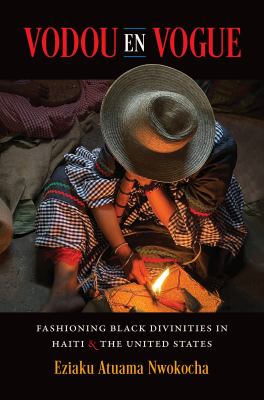 This innovative book centers on fashion and dress among female Vodou practitioners, focusing on fashion's significance within religious ritual, material aesthetics, and embodiment by spirits. With 15 stunning color plates and 12 black-and-white illustrations, the volume effectively links bodily adornment and the formation of religious belief. In conducting her research, Nwokocha (Miami Univ.) spent time accompanying Vodou practitioners to fabric stores in the Boston area. Her central question: What do Vodou spirits (lwa) want? She concludes that, above all, Vodou spirits want to be associated with aesthetically pleasing words, actions, and dress. Nwokocha amply illustrates how the lwa shape the lives of their devotees through the physical presentation of style and adornment, correctly emphasizing that lwa care very much about how their worshipers look. The book focuses on a single manbo, Marie Maude--a Haitian mental health clinician living in the US--who sponsors Vodou ceremonies in both Jacmel, Haiti, and Mattapan, MA. This valuable corrective to past scholarship, which presented Vodou as a religion defined by poverty, shows that participants in Manbo Maude's Mattapan ceremonies are middle class. Vodou en Vogue compares favorably to Karen McCarthy Brown's classic Mama Lola: A Vodou Priestess in Brooklyn (1991), similarly providing an intimate portrait of African-based religion in everyday life.Summing Up: Highly recommended. General readers and advanced undergraduates through faculty. |