| A Weary Road : Shell Shock In The Canadian Expeditionary Force, 1914-1918 |
| | ISBN: 9781442644717 | Price: 54.00 | | |
| Volume: | Dewey: 616.85/2120971 | Grade Min: 17 | Publication Date: 2018-10-12 | |
| LCC: 2018-420596 | LCN: RC550.H86 2018 | Grade Max: | Version: | |
| Contributor: Humphries, Mark Osborne | Series: | Publisher: University of Toronto Press | Extent: 504 | |
| Contributor: | Reviewer: J. L. Granatstein | Affiliation: emeritus, York University | Issue Date: June 2019 | |
| Contributor: | | | | |
 This is a long, important book by one of the leading younger military historians in Canada. Humphries (Wilfrid Laurier, Canada) has gained access to the records of Canadian soldiers' medical cases that were found only in 2003 and remained unused until his work. The files documented cases of shell shock in the Canadian Expeditionary Force in the Great War, including those treated in British hospitals; adding to these records is his research in British and Australian archival sources and massive exploration of published materials. The result, heavily detailed and well written, is an unquestionably superb revisionist addition to accounts of battle fatigue and, as well, to what we now call Post Traumatic Stress Disorder. Moreover, because Humphries understands (and has written on) the battlefield actions of the Great War, his study puts much of what happened to his shell-shocked subjects--including their comments on their condition as recorded at the time--into the proper military context. The result is a major contribution to military and medical history.Summing Up: Essential. Upper-division undergraduates through faculty. |
| American Sutra : A Story Of Faith And Freedom In The Second World War |
| | ISBN: 9780674986534 | Price: 29.95 | | |
| Volume: | Dewey: | Grade Min: | Publication Date: 2019-02-19 | |
| LCC: 2018-036377 | LCN: D769.8.A6W55 2019 | Grade Max: | Version: | |
| Contributor: Williams, Duncan Ryuken | Series: | Publisher: Harvard University Press | Extent: 400 | |
| Contributor: | Reviewer: John T. Rasel | Affiliation: Cuyahoga Community College | Issue Date: July 2019 | |
| Contributor: | | | | |
 Since the end of WW II, hundreds of books, articles, and stories about the Japanese American internment have been published, collectively forming a rich and vibrant history. However, many of those studies focus on race and racism while offering just a cursory mention of religion as a contributing factor. Williams (Univ. of Southern California) delivers a pioneering reinterpretation and retelling of the internment through the lens of religion. He argues that practicing Buddhism made large numbers of the Japanese and Japanese American community appear even more un-American than their Christian counterparts--in essence, amplifying their "otherness" with a foreign, Asian religion in the midst of war. In 10 chapters, American Sutra confronts the question of whether persons of Japanese ancestry could be Buddhist and American at the same time. Despite crackdowns on Buddhism in Hawaii under martial law and restrictions on the faith while Japanese and Japanese American Buddhists were incarcerated or serving their country, they coped with injustice by way of that faith. It is worth noting that of the book's 384 pages, only 258 account for the main content. In addition to being meticulously researched and cited, it is also a pleasure to read.Summing Up: Essential. All readers. |
| Becoming Lincoln |
| | ISBN: 9780813941561 | Price: 34.95 | | |
| Volume: | Dewey: 973.7092 | Grade Min: | Publication Date: 2018-09-25 | |
| LCC: 2017-061669 | LCN: E457.35.F74 2018 | Grade Max: | Version: | |
| Contributor: Freehling, William W. | Series: | Publisher: University of Virginia Press | Extent: 384 | |
| Contributor: | Reviewer: Steven J. Ramold | Affiliation: Eastern Michigan University | Issue Date: February 2019 | |
| Contributor: | | | | |
 Abraham Lincoln accomplished much as president, and works on his political achievements are, of course, numerous. In Becoming Lincoln, Freehling (emer., humanities, Univ. of Kentucky) shows how Lincoln learned to become a skilled political operative by highlighting events in Lincoln's pre-presidential political career that show how Lincoln learned from both his successes and his failures. Freehling devotes much of the book to explaining how Lincoln, through various interpersonal relationships that developed on the frontier, came to understand the motivations of voters through their desire for personal opportunity. Lincoln's grasp of the concept of the self-made man, of which he himself was a great example, led him to understand not only the desires of potential voters, but also the desire for freedom among the nation's slaves. Lincoln was not an egalitarian by today's standards, but his adherence to personal freedom explains his decision-making as a young politician. Lincoln was often defeated when running for office, but his losses, as Freehling demonstrates, were less about personal shortcomings and more about unwillingness to deny the opportunity to others that had given him the chance to rise in status. A very readable and well-argued volume, Becoming Lincoln will become a standard in Lincoln biographies.Summing Up: Essential. Lower-division undergraduates through faculty; general readers. |
| Bureau Of Spies : The Secret Connections Between Espionage And Journalism In Washington |
| | ISBN: 9781633884762 | Price: 26.00 | | |
| Volume: | Dewey: | Grade Min: | Publication Date: 2018-09-04 | |
| LCC: 2018-016005 | LCN: JK468.I6U8 2018 | Grade Max: | Version: | |
| Contributor: Usdin, Steven T. | Series: | Publisher: Prometheus Books, Publishers | Extent: 360 | |
| Contributor: | Reviewer: Christopher C. Lovett | Affiliation: Emporia State University | Issue Date: February 2019 | |
| Contributor: | | | | |
 Most Americans associate espionage with national intelligence agencies. But with the 2016 election, many became aware of how deception, misinformation, and "fake news" worked in the service of Putin's Russia. Who better to deceive and manipulate a naive public than newsmen? Usdin, a respected scholar of intelligence operations and the author of Engineering Communism (CH, Mar'06, 43-4191), examines the world of espionage among journalists in Washington, D.C., from the 1920s through the Cold War. Usdin focuses on spies and agents of influence working out of the National Press Building. Some, like Robert Allen, Drew Pearson's partner on Washington Merry-Go-Round, clandestinely provided Soviet intelligence with valuable inside information. But Allen was not the only journalist working for the Soviets. Another was I.F. Stone, and like Allen, he hid that information from his readers and colleagues. Usdin also traces how journalists shaped American attitudes rejecting isolationism before Pearl Harbor and served as a back channel during the Cuban Missile Crisis. Bureau of Spies is a landmark study that will shape our understanding of the secret relationship between intelligence services and the media for generations to come.Summing Up: Essential. Upper-division undergraduates through faculty. |
| Chicano Communists And The Struggle For Social Justice |
| | ISBN: 9780816538669 | Price: 55.00 | | |
| Volume: | Dewey: 322.4068/72073 | Grade Min: | Publication Date: 2019-04-02 | |
| LCC: 2018-037379 | LCN: E184.M5B767 2018 | Grade Max: | Version: | |
| Contributor: Buelna, Enrique M. | Series: | Publisher: University of Arizona Press | Extent: 304 | |
| Contributor: | Reviewer: Raymond Douglas Screws | Affiliation: Arkansas National Guard Museum | Issue Date: September 2019 | |
| Contributor: | | | | |
 Buelna (Cabrillo College) covers the Communist Party (CP) as well as social issues within the Mexican American community of Los Angeles centered on activist Ralph Cuaron between the 1940s and 1970s. Throughout this viable and well-presented book, Buelna encapsulates the struggles Cuaron encountered within the CP and with labor, community activities, and especially discrimination against Mexican Americans. Buelna could have told this general story without Cuaron as the main character, and this is certainly not a biography. But Cuaron's activism brings the struggle alive! Cuaron fought for social justice and mentored a community of Chicano/a activists from his family's home on Princeton Street in East Los Angeles, along with his wife, Sylvia. This well-research study is somewhat biased in favor of the communists and activists, but this does not detract from its value. In this case the bias, intentional or not, enhances the objective. Buelna's book adds another layer to our understanding of American communism at mid-century, as well as the labor fight, community, and race.Summing Up: Essential. Upper-division undergraduates through faculty. |
| Coloniality Of The Us/mexico Border : Power, Violence, And The Decolonial Imperative |
| | ISBN: 9780816537198 | Price: 50.00 | | |
| Volume: | Dewey: | Grade Min: | Publication Date: 2018-10-23 | |
| LCC: 2018-009772 | LCN: HM886.H47 2018 | Grade Max: | Version: | |
| Contributor: Hernandez, Roberto D. | Series: | Publisher: University of Arizona Press | Extent: 264 | |
| Contributor: | Reviewer: Ruben G. Mendoza | Affiliation: California State University, Monterey Bay | Issue Date: May 2019 | |
| Contributor: | | | | |
 The timely interrogation of US-Mexico borderlands holds particular currency where the racialized rhetoric and sexualized violence of the current body politic of the US government is concerned. What with caged Mexican children, privatized US Immigration detention centers, migrant detainee deaths and human rights abuses, and associated patterns of political graft and corruption, the paroxysm of racialized forms of state-sanctioned social violence in the borderlands has morphed into something largely unforeseen a few years ago. Hernandez (San Diego State) has produced a stunningly brilliant call to action and an intellectually vibrant interdisciplinary interrogation of the origins, nature, and extent of borderlands violence. Drawing on an interpretive schema centered on coloniality as opposed to colonialism, Hernandez dissects and deconstructs the colonial and frontier origins of that deeply ingrained corpus of dehumanizing violence(s) born of an epistemic of racialized and sexualized cultural and sociopolitical constructs. This he contends is the product of "the cartographic prison of modernity/coloniality" born of those colonial systems of racialized/sexualized violence that persist, sans the institutions that originally spawned and propagated their proliferation within the contemporary interstate system of racialized Indigenous oppression and surveillance.Summing Up: Essential. Upper-division undergraduates through faculty. |
| Conquered : Why The Army Of Tennessee Failed |
| | ISBN: 9781469649504 | Price: 37.50 | | |
| Volume: | Dewey: | Grade Min: | Publication Date: 2019-05-20 | |
| LCC: 2018-049280 | LCN: E470.5.D3547 2019 | Grade Max: | Version: | |
| Contributor: Daniel, Larry J. | Series: Civil War America Ser. | Publisher: University of North Carolina Press | Extent: 456 | |
| Contributor: | Reviewer: Edward R. Crowther | Affiliation: emeritus, Adams State University | Issue Date: September 2019 | |
| Contributor: | | | | |
 The Army of Virginia and Robert E. Lee stand at the center of the Confederate cause, but the Army of Tennessee waged some of the Civil War's most decisive battles. Its defeats at Shiloh and Chattanooga, for example, helped elevate Ulysses Grant to overall command of the victorious forces of the US, demonstrating the peculiar importance of this Confederate Army in Civil War history. With less than one soldier per square mile to hold the territory it was tasked with defending, the Army of Tennessee persisted, overcoming a plague of obstacles before devastating defeats at Franklin and Nashville and its ultimate surrender at Durham. Daniel addresses two interrelated questions: Why did this army ultimately yield, and why did it persist so long. A welter of factors--not just the absence of an equivalent of Robert E. Lee--allowed US forces to prevail and a belief in the righteousness of its cause and ultimate victory--including the confidence of ordinary soldiers in Joseph Johnston's generalship--kept the army together. Daniel's ecology explaining persistence and his wise appraisal of the historiographic issues makes this volume an essential read.Summing Up: Essential. Lower-division undergraduates through faculty. |
| Disruption In Detroit : Autoworkers And The Elusive Postwar Boom |
| | ISBN: 9780252042010 | Price: 110.00 | | |
| Volume: | Dewey: 331.88/1292220975434 | Grade Min: | Publication Date: 2018-09-14 | |
| LCC: 2018-007677 | LCN: HD8039 | Grade Max: | Version: | |
| Contributor: Clark, Daniel J. | Series: Working Class in American History Ser. | Publisher: University of Illinois Press | Extent: 266 | |
| Contributor: | Reviewer: Richard L Saunders | Affiliation: Southern Utah University | Issue Date: April 2019 | |
| Contributor: | | | | |
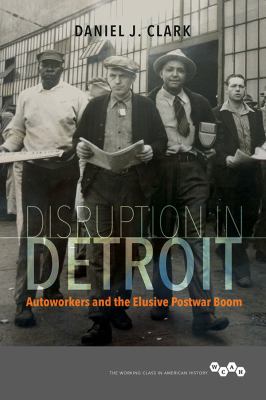 It is received wisdom among historians that the 1950s were economically flush times for the auto industry: workers enjoyed high wages and benefits secured by union contracts, and postwar assembly lines created a solid backbone of an industrial middle class. Using oral histories from former workers themselves, Clark peers under the generalizations to look at ground-level realities. Wages were high, but work was sporadic. Contract terms were generous, but benefits were rarely realized. Turnover was astronomical, racism was endemic, and strikes were frequent. The workforce moved fluidly in and out of assembly lines between secondary jobs, often not returning to the line. Detroit autoworkers, Clark (Oakland Univ.) concludes, experienced the quarter-century of postwar industry, "its supposed heyday, as an era of job instability and economic insecurity." The author deserves credit for diving deeply into lived experience rather than accepting the assertions expressed in policy or news reporting. The blue-collar experience of mid-century proves much more fragmented than as viewed by broad period or in terms of national context. The US postwar economy at ground level was, it seems, more bust than boom. A book that must be considered by those studying American economics.Summing Up: Essential. Upper-division undergraduates through faculty. |
| Embattled Freedom : Journeys Through The Civil War's Slave Refugee Camps |
| | ISBN: 9781469643625 | Price: 34.95 | | |
| Volume: | Dewey: 973.7115 | Grade Min: | Publication Date: 2018-11-26 | |
| LCC: 2018-020213 | LCN: E453.T18 2018 | Grade Max: | Version: | |
| Contributor: Taylor, Amy Murrell | Series: Civil War America Ser. | Publisher: University of North Carolina Press | Extent: 368 | |
| Contributor: | Reviewer: Douglas W Steeples | Affiliation: emeritus, Mercer University | Issue Date: April 2019 | |
| Contributor: | | | | |
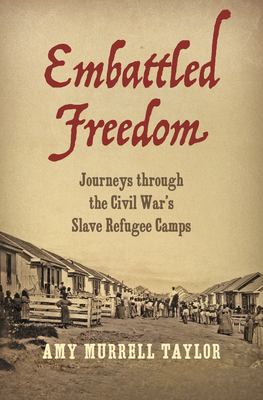 Massively researched, deftly blending narrative and exposition, finely crafted, opening new territory and accessible to a wide audience, this book is award-worthy. It takes experiences of an escaped slave couple at Fort Monroe, Virginia--a runaway mother and family from eastern Arkansas and a black Kentucky preacher, all in refugee camps--as illustrative. It notably discusses women's, children's, and entire families' affairs (including marital matters) in all of its eight thematic chapters. Chapters consider escapees' needs for food, shelter, paying work, making new lives and creating communities, and a distinctive free black Christianity. They treat survival of shifting political and military conditions, frequent relocations, support work, combat and short rations, and wages as appropriate. Yankee and Southern troops looted, burned structures, raped, abused, and sometimes lynched or repatriated escapees. Northern ladies who raised huge amounts of clothing sneered when former slaves traded rags for finery. Doing so was "uppity" in an age when clothing denoted status. Meanwhile, freed persons' preference for clustering houses instead of lining them along orderly streets confirmed for whites that blacks were inferior. The camps' records taught few, if any, lessons and left ingrained white racial views. Photographs, maps, notes.Summing Up: Essential. Upper-division undergraduates through faculty. |
| Jefferson, Madison, And The Making Of The Constitution |
| | ISBN: 9781469651019 | Price: 32.50 | | |
| Volume: | Dewey: 342.7302/9 | Grade Min: | Publication Date: 2019-06-10 | |
| LCC: 2018-049278 | LCN: KF4520.B76 2019 | Grade Max: | Version: | |
| Contributor: Broadwater, Jeff | Series: | Publisher: University of North Carolina Press | Extent: 296 | |
| Contributor: | Reviewer: John J. Fox | Affiliation: emeritus, Salem State University | Issue Date: October 2019 | |
| Contributor: | | | | |
 Upon being elected to the Virginia House of Delegates in 1776, Thomas Jefferson met James Madison for the first time. This meeting led to a friendship that lasted a lifetime. Although they did not always agree on political matters, their friendship remained in place, and each would be remembered for his contributions to the nation. For Jefferson, this was the Declaration of Independence. For Madison, it was the Constitution and the Bill of Rights. It is fair to say that their interactions played a major role in the framing of our government. The story of this friendship is well told by Broadwater (Barton College). Although there are other scholarly works that touch on the same subject, Broadwater has written in a style that will appeal to a wider audience. This reviewer received this book as an assignment from Choice as he was preparing a fall course on Framers of the Constitution for a Life Long Learning Institution program. This reviewer will recommend this book to his students. It belongs in the libraries of institutions of higher education and in major public libraries.Summing Up: Essential. Upper-division undergraduates through faculty. |
| Life Of The Indigenous Mind : Vine Deloria Jr. And The Birth Of The Red Power Movement |
| | ISBN: 9781496211903 | Price: 75.00 | | |
| Volume: | Dewey: 810.8/0897 | Grade Min: | Publication Date: 2019-08-01 | |
| LCC: 2018-045053 | LCN: E90.D45M37 2019 | Grade Max: | Version: | |
| Contributor: Martinez, David | Series: New Visions in Native American and Indigenous Studies | Publisher: University of Nebraska Press | Extent: 480 | |
| Contributor: | Reviewer: Christopher T. Vecsey | Affiliation: Colgate University | Issue Date: December 2019 | |
| Contributor: | | | | |
 The 1969 publication of Custer Died for Your Sins made Vine Deloria Jr. the most prominent spokesman for Native Americans. In that manifesto and in his many subsequent writings, he expressed a dynamic tribal nationalism that earned him Indian Country Today's Indian Visionary Award shortly before his death in 2005. In this text, Martinez (Arizona State Univ.) has composed a comprehensive account of Deloria's four earliest books about tribal self-determination and the American need for Indian values. He recounts how Deloria assailed longstanding paternalistic attempts by whites to dispossess, exploit, and assimilate Indians, suppress their spirituality, and terminate their treaty status. He had a decided influence on developing US federal policies that somewhat recognized Indian sovereignty. Perhaps most important was his profound, abiding effect on fellow Natives, stirred by his impassioned declarations of individual Indian human rights and tribal sovereignty: rejecting the melting pot, reaffirming traditional religion, espousing kinship-based communal sharing, and achieving greater self-governance. He avowed over his lifetime that "the [i]ndigenous mind is the [i]ndigenous community's most potent weapon against colonialism." Martinez has created here an affecting portrait of one of America's most influential indigenous rights activists.Summing Up: Highly recommended. Lower-division undergraduates through faculty; professionals. |
| Marque And Reprisal : The Spheres Of Public And Private War |
| | ISBN: 9780700627752 | Price: 59.99 | | |
| Volume: | Dewey: 343.015354 | Grade Min: | Publication Date: 2019-04-22 | |
| LCC: 2018-058628 | LCN: KZ6418.5.M67 2019 | Grade Max: | Version: | |
| Contributor: Moss, Kenneth B. | Series: | Publisher: University Press of Kansas | Extent: 464 | |
| Contributor: | Reviewer: Jacob D Bourboun | Affiliation: University of North Dakota | Issue Date: October 2019 | |
| Contributor: | | | | |
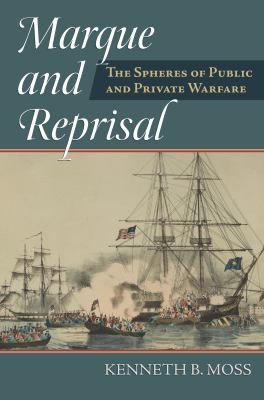 Article I, Section 8, of the Constitution gives the Congress the power to grant letters of marque and reprisal, otherwise known as the licensing of privateers. In Marque and Reprisal, Moss, an emeritus professor of national security studies at the National Defense University, shows readers that this seemingly esoteric law written for a bygone era is still relevant today. Superbly researched and well-written, this book is more than just a history of privateers and mercenaries and how they eventually came under state control. It examines all aspects of private actors in war, their place in American history, and the reasons for their continual use. By drawing parallels between privateers and the modern forms of private warfare--mostly in the form of Department of Defense contractors and private military firms--this book shows how the "marque and reprisal clause" not only sanctions the US use of mercenaries and military contractors but also how the US became the largest provider and customer of private military firms. Though an essential addition to both the historiography of mercenaries and privateers and the scholarship of war, this book is heavy on theory and not recommended for all readers.Summing Up: Essential. Upper-division undergraduates through faculty. |
| Racial Migrations : New York City And The Revolutionary Politics Of The Spanish Caribbean, 1850-1902 |
| | ISBN: 9780691183534 | Price: 53.00 | | |
| Volume: | Dewey: 974.7104687291 | Grade Min: | Publication Date: 2019-05-07 | |
| LCC: | LCN: | Grade Max: | Version: | |
| Contributor: Hoffnung-Garskof, Jesse | Series: | Publisher: Princeton University Press | Extent: 408 | |
| Contributor: | Reviewer: Luis H Moreno | Affiliation: Bowling Green State University | Issue Date: October 2019 | |
| Contributor: | | | | |
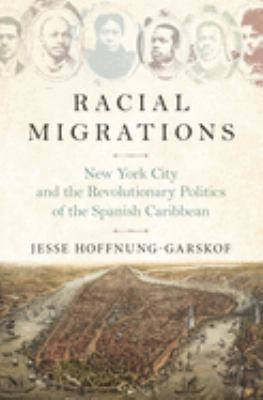 Historian Hoffnung-Garskof presents a forgotten narrative of Afro-Latino migrants (African descent from Cuba and Puerto Rico) during the late 19th century as they navigated their connection to the revolutionary politics of the Spanish Caribbean and New York City. In telling the narrative of revolutionary Afro-Latino migrants, Hoffnung-Garskof provides the reader with a new interpretation of revolutionary Afro-Latino and African American activism and intellectual production by focusing on the microhistories of writers, politicians, publishers, and activists in New York City. Likewise, the book sheds new light on the intersections of migration and activism between Afro-Latino migrants exiled in New York City and others in their homeland of the Spanish Caribbean. The book is well researched and provides an essential list of characters, including their background information, such as revolutionary activists Rafael Serra, Sotero Figueroa, and Gertrudis Heredia de Serra. Also, Hoffnung-Garskof includes a series of maps and photos as a visual tool to tell the forgotten narrative of revolutionary Afro-Latino migrants.The book expands our understanding of the intersections of Afro-Latinos, migration, and revolutionary politics of the Spanish Caribbean within the fields of Latina/o/x and Caribbean Studies.Summing Up: Essential. Upper-division undergraduates through faculty. |
| Surviving Genocide : Native Nations And The United States From The American Revolution To Bleeding Kansas |
| | ISBN: 9780300218121 | Price: 37.50 | | |
| Volume: | Dewey: 973.04/97 | Grade Min: | Publication Date: 2019-06-11 | |
| LCC: 2018-958482 | LCN: E93.O78 2019 | Grade Max: | Version: | |
| Contributor: Ostler, Jeffrey | Series: | Publisher: Yale University Press | Extent: 544 | |
| Contributor: | Reviewer: Gregory Omer Gagnon | Affiliation: emeritus, Loyola University of New Orleans College of Law | Issue Date: October 2019 | |
| Contributor: | | | | |
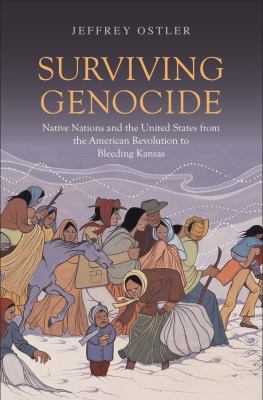 American Indian nations and communities tenaciously resisted implacable American determination to destroy them and take their lands. Ostler offers ample evidence of a pattern of determined extirpation of any Native nations that opposed American absorption. Genocide was American policy. Indian survival tactics were tenacious, varied, and evolving. Ostler's scholarship sweeps across Indian country east of the Mississippi and into the "zone of removal." Quotations from Native and American sources drive home evidence of genocide. Detailed, often tribe by tribe, summaries explain how perfidious Americans met Native responses. The narrative includes estimates of Native losses both direct and indirect, of the inter- and intra-tribal conflicts engendered by American expansion, and of the brutality of American force. Valuable information about tribal responses to the new order enhance Ostler's scholarship. He echoes most scholars with exposure of the hypocrisy of American justifications for the determined, consistent assaults on American Indian nations. This is an exceptional synthesis of current research presented convincingly. It is a major contribution to Native American and United States studies.Summing Up: Essential. Upper-division undergraduates through faculty. |
| The American South And The Great War, 1914-1924 |
| | ISBN: 9780807169377 | Price: 47.00 | | |
| Volume: | Dewey: | Grade Min: | Publication Date: 2018-11-11 | |
| LCC: 2018-012613 | LCN: F215.A43 2018 | Grade Max: | Version: | |
| Contributor: Downs, Matthew L. | Series: | Publisher: LSU Press | Extent: 256 | |
| Contributor: Floyd, M. Ryan | Reviewer: Timothy Paul Bowman | Affiliation: West Texas A&M University | Issue Date: May 2019 | |
| Contributor: Cox, Annette | | | | |
 The American South and the Great War demonstrates how US participation in the Great War helped modernize the South while also precipitating social and economic changes that came to fruition during WW II. No short summary could do this valuable anthology justice. Hall's "Manhood, Duty and Service" analyzes how masculinity informed North Carolinian men of fighting age in their decisions to stay home or to fight--a choice which drew community support. In "To Call to Duty in the Old North State," Smith and Gorman analyze how the home front shifted in response to federal calls on women to contribute to the war effort, which in turn informed their self-perceived places in society during the following decades. One of the volume's standout essays is Sartain's "The Race's Greatest Opportunity since Emancipation," which analyzes the NAACP's wartime strategies to assault segregation and move the fight for racial equality past more conservative accommodationist approaches. Taken as a whole, this is an invaluable collection that reconfigures historians' understanding of race and class and social, economic, and political change in the 20th-century American South.Summing Up: Highly recommended. Advanced undergraduates through faculty and professionals. |
| The Calculus Of Violence : How Americans Fought The Civil War |
| | ISBN: 9780674984226 | Price: 29.95 | | |
| Volume: | Dewey: 973.7 | Grade Min: | Publication Date: 2018-11-05 | |
| LCC: 2018-001864 | LCN: E468.S35 2018 | Grade Max: | Version: | |
| Contributor: Sheehan-Dean, Aaron | Series: | Publisher: Harvard University Press | Extent: 480 | |
| Contributor: | Reviewer: Robert C. Doyle | Affiliation: Franciscan University of Steubenville | Issue Date: March 2019 | |
| Contributor: | | | | |
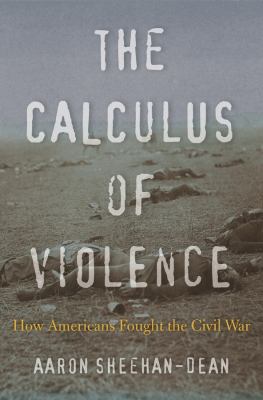 Sheehan-Dean's new book is perhaps the best thing this reviewer has read about the Civil War in ages. An expertly researched and written history, it examines the dark side of the American Civil War, namely war against civilians, partisan/guerrilla war, and the nasty issues that developed about prisoners of war on both sides. Sheehan-Dean (Louisiana State) shows that the laws of war changed in 1863 with the promulgation of General Order 100, written by Franz Lieber and approved by Abraham Lincoln. The hope was to bring order to the chaos of Civil War bloodletting. Was Lieber successful? Yes and no. Yes in the sense that regular line Union and Confederate soldiers readily took prisoners; no, in the sense that partisans/guerrillas like William Quantrill, "Bloody" Bill Anderson, and others often did not. Then came the ultimate complication: United States Colored Troops (USCT) whom the Confederates did not respect as soldiers and readily executed or sent back into slavery. This author shows conclusively that it was a chivalrous war sometimes, sometimes not; a passionate war sometimes, sometimes not; a modern war sometimes, sometimes not. This precious book shows the hard complications of 1861-65 warfare, and is a most welcome addition to American Civil War studies.Summing Up: Essential. Upper-division undergraduates through faculty. |
| The Harvest Of American Racism : The Political Meaning Of Violence In The Summer Of 1967 |
| | ISBN: 9780472073887 | Price: 65.00 | | |
| Volume: | Dewey: 363.32/11097309046 | Grade Min: | Publication Date: 2018-07-24 | |
| LCC: 2018-020208 | LCN: E185.615.H3258 2018 | Grade Max: | Version: | |
| Contributor: Shellow, Robert | Series: | Publisher: University of Michigan Press | Extent: 176 | |
| Contributor: | Reviewer: John F Lyons | Affiliation: Joliet Junior College | Issue Date: January 2019 | |
| Contributor: | | | | |
 After a series of urban riots roiled the nation in the summer of 1967, President Lyndon B. Johnson established the National Advisory Commission on Civil Disorders to investigate causes of the turmoil. The Commission, under the leadership of Illinois Governor Otto Kerner, hired a team of social scientists to prepare a report on the riots, but the Commission rejected their findings as too contentious and instead published a more politically expedient study. The final Kerner report blamed the riots on the slow pace of economic and racial equality, while the rejected report--titled "The Harvest of American Racism: The Political Meaning of Violence in the Summer of 1967"--was a far more hard-hitting critique of racism and policing in America. This text includes the full, hitherto unpublished report, an introduction by psychologist Robert Shellow, one of the chief authors of the original study, and personal recollections from three of the other surviving authors of the report. The book could have done with an index, but otherwise this fascinating and timely report is a must-read for those concerned about race relations not only in the past but in present-day America.Summing Up: Essential. All academic levels. |
| The Small Shall Be Strong : A History Of Lake Tahoe's Washoe Indians |
| | ISBN: 9781625343468 | Price: 90.00 | | |
| Volume: | Dewey: | Grade Min: 17 | Publication Date: 2018-06-30 | |
| LCC: 2017-050254 | LCN: E99.W38M35 2018 | Grade Max: | Version: | |
| Contributor: Makley, Matthew S. | Series: | Publisher: University of Massachusetts Dartmouth | Extent: 248 | |
| Contributor: | Reviewer: Daniel M. Cobb | Affiliation: University of North Carolina at Chapel Hill | Issue Date: January 2019 | |
| Contributor: | | | | |
 Makley (Metropolitan State Univ.) offers a compelling narrative of the Washoe Indians, a tribal nation indigenous to the area around Lake Tahoe in present-day Nevada and California. Rooted in oral interviews, archival research, and secondary literature, the book presents nine tightly constructed chapters that carry the narrative from Washoe creation stories to contemporary accounts of efforts to reassert sovereignty of place. Makley examines Washoe encounters with settler colonialism when the silver rush unleashed miners, loggers, and settlers in the area in the mid-19th century; the Washoe's surprising use of the otherwise catastrophic General Allotment Act to protect their pine nut lands around the turn of the 20th century; Washoe efforts to enter into intergovernmental partnerships to assert the right to serve as stewards of the region and its resources; the creation of a language immersion school; and successful drives to ban rock climbing on sacred sites. This timely work makes a strong case for how attention to tribal nations can provide unique insights into the history and contemporary state of Native North America. It also broadens the literature on the Great Basin, including Ned Blackhawk's Violence over the Land (CH, Jul'07, 44-6412) and Martha Knack's Boundaries Between (CH, Jun'02, 39-6006). This volume is a model of ethnohistorical scholarship.Summing Up: Highly recommended. Lower-division undergraduates through faculty; general readers. |
| The Widow Washington : The Life Of Mary Washington |
| | ISBN: 9780809097012 | Price: 28.00 | | |
| Volume: | Dewey: 973.41092 | Grade Min: | Publication Date: 2019-06-11 | |
| LCC: 2018-056295 | LCN: E312.19.W35S38 2019 | Grade Max: | Version: | |
| Contributor: Saxton, Martha | Series: | Publisher: Farrar, Straus & Giroux | Extent: 384 | |
| Contributor: | Reviewer: Paul Harvey | Affiliation: University of Colorado at Colorado Springs | Issue Date: November 2019 | |
| Contributor: | | | | |
 George Washington's mother has not fared well at the hands of historians, who have depicted her as a scold and nag of the Virginia gentleman who defeated the British and founded the US. But Saxton (formerly, Amherst College) demolishes that view in this richly detailed biography of Mary Ball Washington (c. 1707-89). In reality, the author uses Mary's status as "mother of George" as a hook to a story that beautifully resurrects an entire social history of the small planter class (and some rich planters) in 18th-century Virginia. Mary lost her father when young, and later her husband, and (as Saxton puts it), "found herself in the mid-1740s with five young children, ranging in age from five to eleven, living on a medium-sized farm on mediocre soil." Throughout, the author reinterprets incidents and letters that have been used against Mary in the past. Saxton's empathy for her subject is balanced with a recognition of the brutality of the slave regime in which Mary played an unrepentant part. This fine book is reminiscent of Laurel Thatcher Ulrich's A Midwife's Tale: The Life of Martha Ballard, Based on Her Diary, 1785-1812 (1990); both authors use the life of an ordinary woman to illuminate an entire society through a past that is both strange and familiar.Summing Up: Essential. Lower-division undergraduates through faculty; general readers. |
| The Woolly West : Colorado's Hidden History Of Sheepscapes |
| | ISBN: 9781623496524 | Price: 40.00 | | |
| Volume: 44 | Dewey: 338.1/763009788 | Grade Min: | Publication Date: 2018-07-17 | |
| LCC: 2017-045910 | LCN: HD9436.U53G85 2018 | Grade Max: | Version: | |
| Contributor: Gulliford, Andrew | Series: Elma Dill Russell Spencer Series in the West and Southwest Ser. | Publisher: Texas A&M University Press | Extent: 420 | |
| Contributor: | Reviewer: Steven Dale Reschly | Affiliation: Truman State University | Issue Date: January 2019 | |
| Contributor: | | | | |
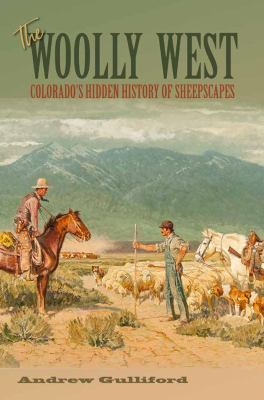 "Our problem is John Wayne didn't film any movies chasing sheep." This sheepman's quote is the epigraph for the final chapter of The Woolly West and is not a bad expression of Gulliford's central point: sheep and sheep herders were, and are, far more important in the real West than than their depiction in the imagined West implies. True enough: this reviewer recalls no sheep stampedes in Westerns. Cattle, horses, and cowboys dominate the filmscape; sheep and sheepdogs not so much. Gulliford (Fort Lewis College) proposes adding "sheepscapes" to Western studies. Gulliford tracked, quite literally, sheep herding in nearly every corner of Colorado, photographing many examples of the most interesting evidence herders left behind, including carvings on Aspen trees that range from religious symbols to naked women. He describes as well a remarkable ethnic diversity: Basque, Greek, Native American, Hispanic, and Anglo herders all appear as further revision of a standard, purely white West. Cutesy title aside, this is not a book to overlook. It will change the way this reviewer teaches US frontier and West history courses. An excellent addition for general collections and any library with a US West section.Summing Up: Highly recommended. All levels/libraries. |
| They Were Her Property : White Women As Slave Owners In The American South |
| | ISBN: 9780300218664 | Price: 30.00 | | |
| Volume: | Dewey: 306.3/620975 | Grade Min: | Publication Date: 2019-02-19 | |
| LCC: 2018-953991 | LCN: E443.J775 2019 | Grade Max: | Version: | |
| Contributor: Jones-Rogers, Stephanie E. | Series: | Publisher: Yale University Press | Extent: 320 | |
| Contributor: | Reviewer: Douglas R. Egerton | Affiliation: Le Moyne College | Issue Date: July 2019 | |
| Contributor: | | | | |
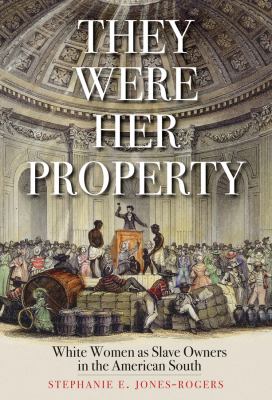 Taking exception to previous historical accounts that claim slaveholding women were reluctant or "fictive" masters, Jones-Rogers (Univ. of California, Berkeley) demonstrates that the relationship between female owners and enslaved blacks was, at bottom, economic rather than social. Married women tended to bring slaves, rather than land, to their marriages, and the products of their investments--from the wages enslaved people earned when hiring out to the crops they picked--were crucial to southern economic growth. Jones-Rogers reveals ownership and control to be techniques taught to young white girls by fathers who regarded mastery as critical aspects of early training. Even in a region that held up paternalism as an ideal, married women routinely challenged their husbands' legal authority over human property, especially slaves they inherited as young women. An institution as widely supported as slavery, Jones-Rogers suggests, could not long have been sustained had its authority and violence been wielded by wealthy white men alone. Deeply researched and closely argued, this unflinching, elegantly written volume--and the stories it tells, especially regarding the sale and purchase of slaves--overturns much of what historians long believed about what one scholar dubbed "a man's business."Summing Up: Essential. Upper-division undergraduates through faculty. |
| Troublemakers : Students' Rights And Racial Justice In The Long 1960s |
| | ISBN: 9781479875139 | Price: 50.00 | | |
| Volume: | Dewey: 344.7307909046 | Grade Min: | Publication Date: 2019-07-02 | |
| LCC: 2018-042919 | LCN: KF4150.S36 2019 | Grade Max: | Version: | |
| Contributor: Schumaker, Kathryn | Series: | Publisher: New York University Press | Extent: 288 | |
| Contributor: | Reviewer: Blaine T. Browne | Affiliation: emeritus, Broward College | Issue Date: December 2019 | |
| Contributor: | | | | |
 Those who associate student protest only with institutions of higher education will find this work enlightening. Schumaker (Univ. of Oklahoma) makes a compelling case that from the late 1960s through the early 1980s, high school students in several states were instrumental in redefining students' constitutional rights. Using the "lens of race," she focuses on how these protests propelled racial reform in different school systems. Prior to this era, she argues, the prevailing notion was that high school students were too immature to form legitimate social and political beliefs and should accept the role of "passive actors," absorbing the wisdom of their elders. The Burger Court, she asserts, was instrumental in identifying and defining constitutional rights that extended to students. The first three chapters examine the evolution of student protest in Mississippi in 1964; the rise of the Chicano movement out of desegregation litigation in Denver, Colorado; and black student protest relating to disciplinary authority in Columbus, Ohio. Remaining chapters are devoted to an examination of the national impact of protests regarding student rights in relation to school discipline and equal protection. This formative era waned in the early 1980s as legal conceptions of student rights solidified.Summing Up: Highly recommended. General readers through faculty. |
| Twice-divided Nation : National Memory, Transatlantic News, And American Literature In The Civil War Era |
| | ISBN: 9780813942384 | Price: 80.50 | | |
| Volume: | Dewey: 973.7/1 | Grade Min: 17 | Publication Date: 2019-02-26 | |
| LCC: 2018-044532 | LCN: E609.G725 2019 | Grade Max: | Version: | |
| Contributor: Graber, Samuel | Series: | Publisher: University of Virginia Press | Extent: 288 | |
| Contributor: | Reviewer: Caro Pinto | Affiliation: Mount Holyoke College | Issue Date: September 2019 | |
| Contributor: | | | | |
 Graber (Valparaiso Univ.) offers a study of American memory during the Civil War era through the lens of news media, literature, and transatlantic relationships between the United States and Great Britain. Graber asks readers to consider American identity when "American nationality in the mid-nineteenth century represented as much an open question as an established fact." He argues that the United States had a less cohesive sense of national identity than perhaps most Americans remember today. The text traces the divides that ultimately gave rise to the Civil War through the rise of the "modern news apparatus," the literature of the period, and explorations of American relations with Great Britain as the two countries drifted away from one another both culturally and politically. This book is ambitious in scope and evidence; advanced readers in the humanities will relish the opportunity to reflect on another fractious period in United States history, but newer readers may struggle. Graber's contribution to the study of American memory is remarkable. Essential for graduate students, faculty, and researchers.Summing Up: Essential. Graduate students through faculty. |
| Under A Darkening Sky : The American Experience In Nazi Europe: 1939-1941 |
| | ISBN: 9781681777368 | Price: 27.95 | | |
| Volume: | Dewey: 940.53089/13 | Grade Min: | Publication Date: 2018-11-06 | |
| LCC: 2018-277505 | LCN: D744.7 | Grade Max: | Version: | |
| Contributor: Lyman, Robert | Series: | Publisher: Pegasus Books | Extent: 336 | |
| Contributor: | Reviewer: Christopher C. Lovett | Affiliation: Emporia State University | Issue Date: March 2019 | |
| Contributor: | | | | |
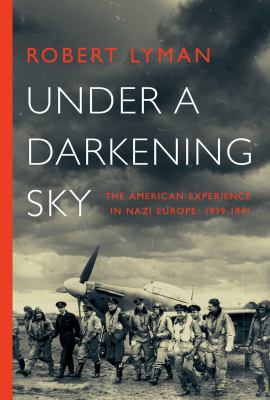 The US is far different today than it was in 1939, when war clouds were on the horizon. American public opinion was divided equally between those who believed in America First and those who opposed Hitlerism. Lyman returns readers to the eve of World War II, and to how American journalists sought to educate the public about the dangers posed by Nazi Germany. Lyman uses first-person accounts of journalists such as William L. Shirer and Howard K. Smith, as well as such cultural icons as Josephine Baker, to dramatize the heart of the struggle between authoritarianism and the hopes and dreams of poplar democracy, as Europe approached the destructive cataclysm of another war. Lyman's account enables readers to visualize the courage and determination it took for young Americans to leave their comfortable surroundings in the US and travel to Canada to volunteer to serve in the RAF during the Battle of Britain. While there are many important and serious historical studies concerning this period of the war, few, if any, capture the moment as well as Lyman does.Summing Up: Essential. All readership levels. |
| Unredeemed Land : An Environmental History Of Civil War And Emancipation In The Cotton South |
| | ISBN: 9780190865177 | Price: 81.00 | | |
| Volume: | Dewey: 338.10975/09034 | Grade Min: | Publication Date: 2018-11-02 | |
| LCC: 2018-012959 | LCN: HD9077.A13M38 2018 | Grade Max: | Version: | |
| Contributor: Mauldin, Erin Stewart | Series: | Publisher: Oxford University Press, Incorporated | Extent: 256 | |
| Contributor: | Reviewer: Jason R. Edwards | Affiliation: Grove City College | Issue Date: April 2019 | |
| Contributor: | | | | |
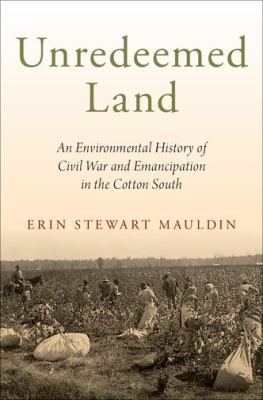 Not surprisingly, the sesquicentennial of the Civil War resulted in a flood of literature on the war, but Mauldin (history, Univ. of South Florida, St. Petersburg) still found fresh soil to till. In considering the impact of the war on land usage, Mauldin carefully documents how the South's defeat increased environmental corrosion as farmers abandoned more balanced, self-sustaining agricultural approaches for cotton production. These are dangerous waters, but the author is in no way an apologist for slavery. She offers a humbling understanding of the human (and environmental) reality that even the greatest goods come with mitigating and unanticipated costs. When it comes to the Civil War, many may be less interested in the environment than in romanticized cavalry charges, but Mauldin proves that to understand the war's aftermath, one should consider the land's role even before popular political or social explanations. She does a commendable job of humanizing a potentially dry topic; her prose is lively, and she combines personalized accounts and moving journal entries with obligatory census data and governmental records. The chapter on the ecological damage done by breastworks and trenches is particularly fascinating, and will deepen understanding of the lasting scars of the Civil War.Summing Up: Essential. Upper-division undergraduates through faculty; general readers. |
| Women's War : Fighting And Surviving The American Civil War |
| | ISBN: 9780674987975 | Price: 26.95 | | |
| Volume: | Dewey: 973.7082 | Grade Min: | Publication Date: 2019-04-15 | |
| LCC: 2018-045331 | LCN: E628.M35 2019 | Grade Max: | Version: | |
| Contributor: Mccurry, Stephanie | Series: | Publisher: Harvard University Press | Extent: 320 | |
| Contributor: | Reviewer: Douglas W Steeples | Affiliation: emeritus, Mercer University | Issue Date: September 2019 | |
| Contributor: | | | | |
 Felicitous and deeply researched, this book will be a classic. Brevity obscures its importance. An opening summary of (men's) creation of international rules of war that forbade attacks on women and children subordinated them. Worse, it left them defenseless and open to illegal attacks. Further discussion treats Northern and Southern (including black's) women's roles in the Civil War. Women on opposing sides sewed uniforms, collected supplies, and at times spied, and enslaved mothers risked all to escape and rescue their children. Federal officers subjected freed persons to current mores, forcing them to marry and form (previously unlawful) families. Conclusions depict a South whose loss of capital in slaves, with other developments, allowed a new commercial and bourgeois elite and middle class to replace the old Southern agrarian, planter-dominated order. Lacking credit, middling to poor white farmers fell into sharecropping. Freed blacks by 1877 had lost any political power held during Reconstruction and became a permanent underclass. At every turn males dominated females. Fine notes, bibliography, illustrations, and appendixes.Summing Up: Essential. Upper-division undergraduates through faculty. |
| Young Benjamin Franklin : The Birth Of Ingenuity |
| | ISBN: 9781101874417 | Price: 30.00 | | |
| Volume: | Dewey: 923.2 | Grade Min: | Publication Date: 2018-09-18 | |
| LCC: 2017-057711 | LCN: E302.6.F8B8833 2018 | Grade Max: | Version: | |
| Contributor: Bunker, Nick | Series: | Publisher: Knopf Doubleday Publishing Group | Extent: 464 | |
| Contributor: | Reviewer: Matthew Adam Byron | Affiliation: Young Harris College | Issue Date: January 2019 | |
| Contributor: | | | | |
 Bunker provides a unique biography by focusing on the first half of the iconic American figure's life. Acknowledging that historians have often overlooked Franklin's formative years, Bunker cobbles together people and events that influenced Franklin's thinking from archives on both sides of the Atlantic. From the enlightenment philosophers to the Franklins, who possessed "ingenuity," Bunker demonstrates how Franklin's upbringing was filled with moments of intellectual breakthroughs as well as personal turmoil. Internally, Franklin struggled to find a moral philosophy that incorporated his religious skepticism with his scientific leanings, as he made his way through an increasingly complex American society. At the same time, Bunker highlights the difficulties of various class groups in England and among those who ventured over to the American colonies. More than simply a story about Franklin, this work offers insight into the struggles for religious, political, and economic rights of Englishmen. A masterful biography of Franklin's early years, Young Benjamin Franklin illuminates Franklin as a "brilliant but flawed" man whose upbringing defined the legend.Summing Up: Essential. Lower-division undergraduates through faculty. |